Introduction
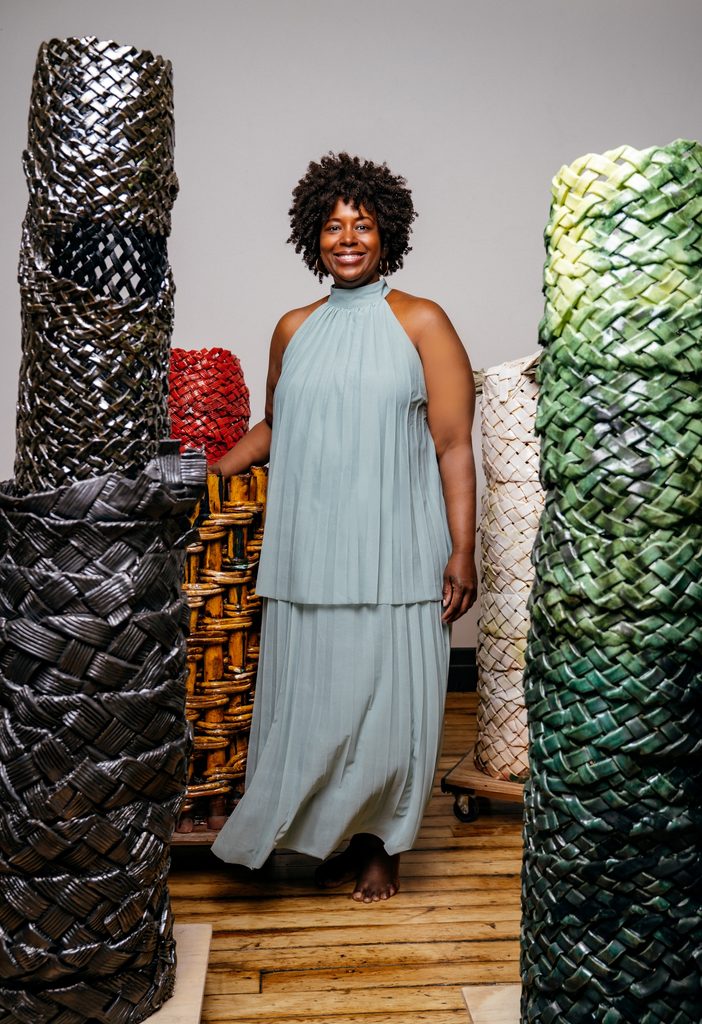
Anina Major: The Sacred Mangrove is the artist’s most significant U.S. museum solo presentation to date. The exhibition takes its title from the mangrove, a coastal tree that protects Caribbean shorelines from erosion and storms while sheltering the marine life that depends on it. For the show, Anina Major extends notions of care and shared responsibility as well as cultural and environmental stewardship.
The installation at PAMM brings together large-scale woven clay towers, bottle trees, and a path of crushed conch shell, where reused shards from her earlier works appear throughout the installation, so that destruction and renewal exist side by side. Visitors are invited to move among the tower forms to reimagine the gallery as a landscape while considering Caribbean ecologies and cultures.
Anina Major (b. 1981, Nassau, Bahamas) works at the intersection of ceramics, sculpture, and installation. She hand-weaves clay into forms that echo palm-leaf plaiting, a Bahamian straw-craft tradition she learned from her grandmother, Saphora Newbold. Newbold supported her family by weaving hats, dolls, and bags for the tourist market.
By reinterpreting a soft, biodegradable material into fired clay, Major expands its context and knowledge traditions while blending woven patterns with her own artistic creations. The technical richness of her artistic practice reveres ceramics as language, while commenting on a practice long dismissed as tourist craft and often taken for granted as “women’s work,” which carries skill and historical weight.
The plaiting technique has a long history and is believed to trace back to enslaved West Africans brought to the Bahamas due to the Transatlantic Slave Trade, and it survives today as a diasporic thread running through basket-weaving and other weaving traditions across the African diaspora. When Major weaves in clay, she is working two histories into one gesture: her grandmother’s generation, who wove to support her family within a tourism economy that often undervalued the labor and knowledge of those local makers, and a much older lineage of enslaved people who carried the technique itself across the Atlantic.
Organization and Support

Supporting Sponsor

Water Tower
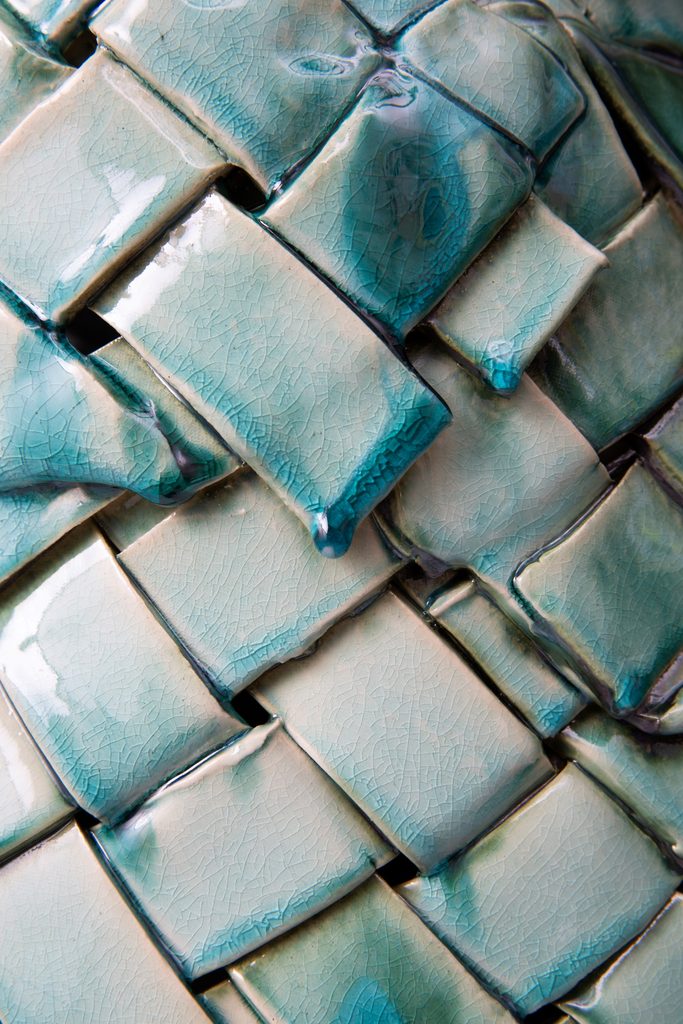
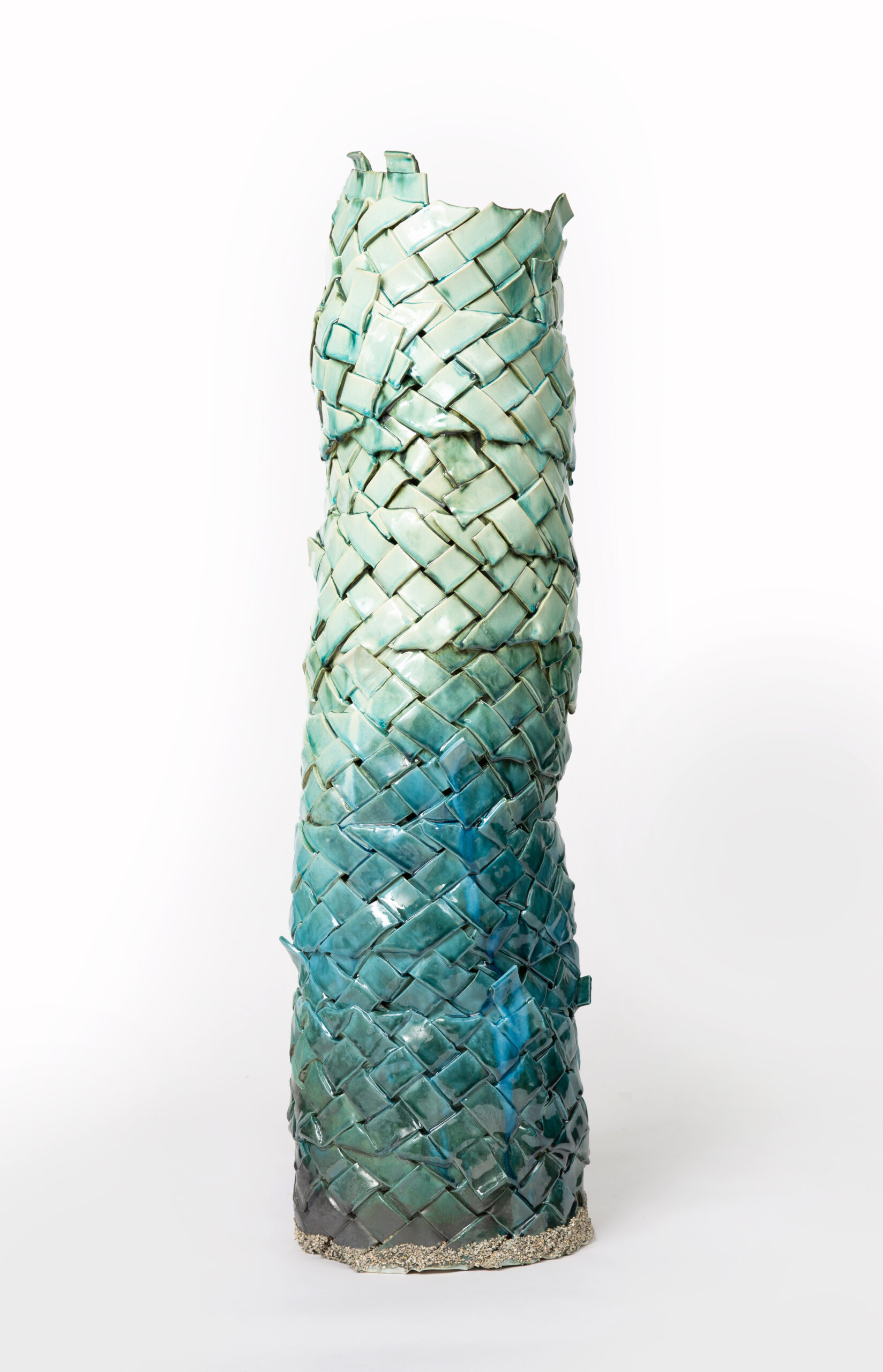
Water Tower continues a body of work Anina Major calls her “Hybrid” and “Plait” series, monumental woven vessels she has been developing since 2021. In the Sacred Mangrove, Water Tower stands nearly four feet tall on a narrow eleven-inch-square base — its shape recalls the cisterns and tanks that store fresh water across the Bahamian island. The surface is built entirely from woven strips of clay, each strand pressed and shaped by hand into a plaited pattern, then glazed and fired. Embedded in that surface are composites of melted sea glass and sand, so the material itself carries traces of the shoreline and its geography. A gesture that connects labor, material, and place.
Major has said plainly that she isn’t interested in recreating straw marketplace objects in clay — her aim is the symbolic weight of the gesture itself, and what it can mean once freed from the marketplace that undervalued it.
Visual description of Water Tower
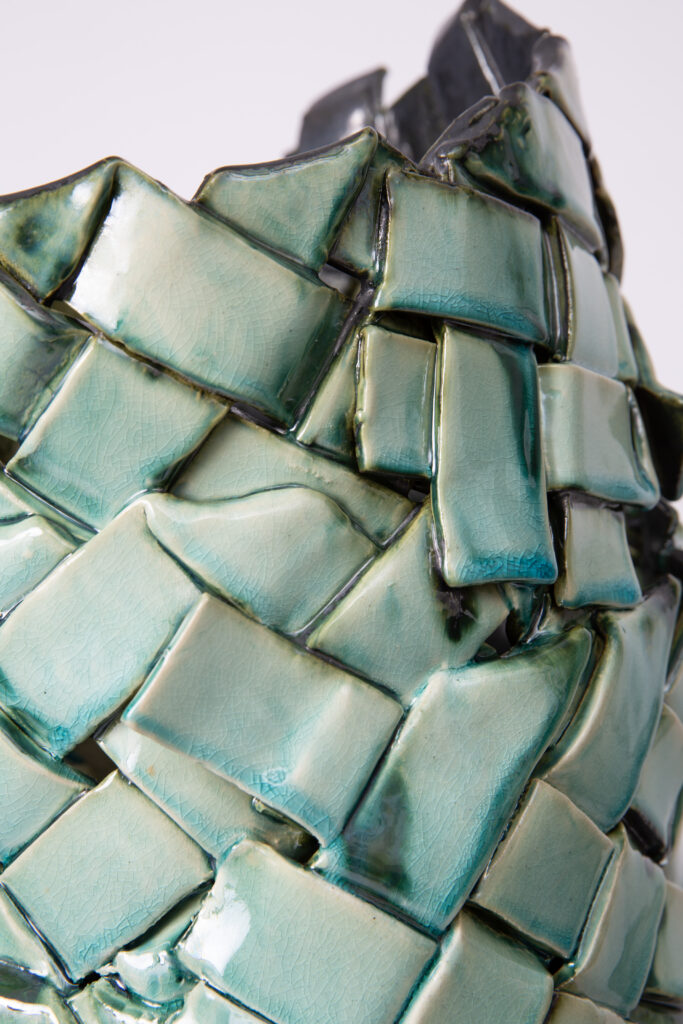
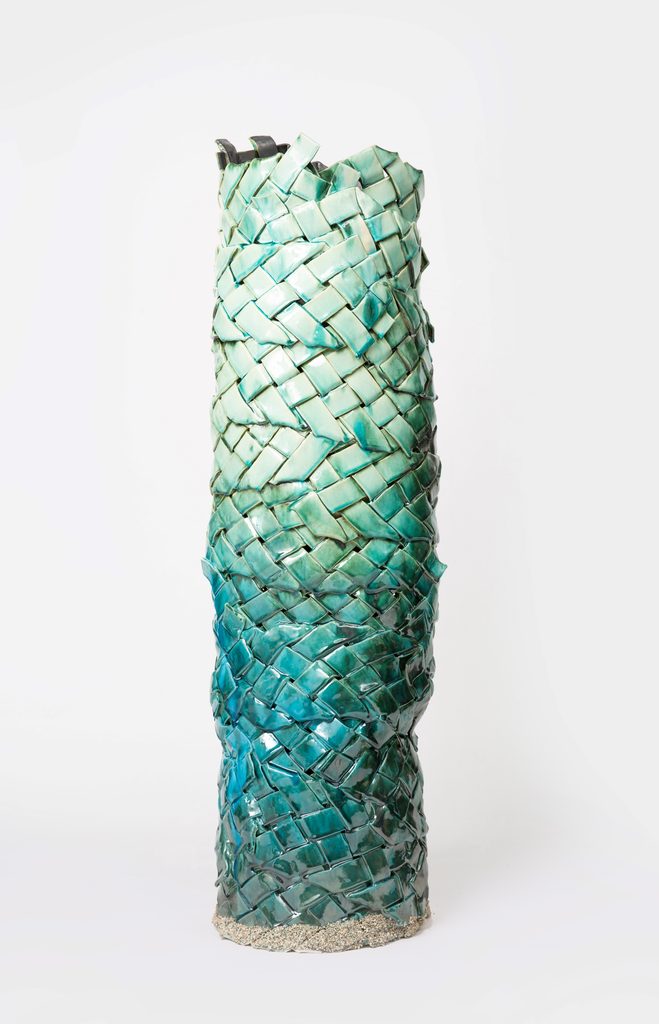
Water Tower by Anina Major is a glazed stoneware, sea glass, and sand sculpture from 2024. The sculpture stands forty-five inches tall by eleven inches wide by eleven inches deep, or about four feet tall by one foot wide. It is a freestanding, vertical column that rises from the floor.
The sculpture takes the form of a tall, narrow column. Its surface is built entirely from small woven strips of clay that interlock in a basketweave pattern, crisscrossing diagonally across the entire height of the piece. The woven texture covers the sculpture uniformly, giving it the appearance of a tightly plaited vessel or tower.
The glaze shifts gradually from top to bottom. Near the top, the woven strips are pale, milky green, almost seafoam in color. Moving downward, the color deepens into richer teal and turquoise tones, and by the base, the glaze darkens further into deep blue-green and forest green hues. The glossy, glass-like glaze catches light differently across the woven surface, pooling in some of the folds and creases between strips and creating areas of high shine alongside more matte, shadowed sections.
The top edge of the sculpture is uneven and irregular, with the woven strips ending at different heights, some curling or peeling slightly outward, exposing the dark, unglazed clay body underneath in a few small gaps. At the base, the woven surface meets a rough band of embedded sea glass and sand, which rings the bottom of the sculpture in a pale, gritty texture. Small fragments catch and scatter light differently than the smooth, glossy ceramic above, creating a textural contrast between the woven body of the piece and its granular foundation.
Forgotten Maiden III
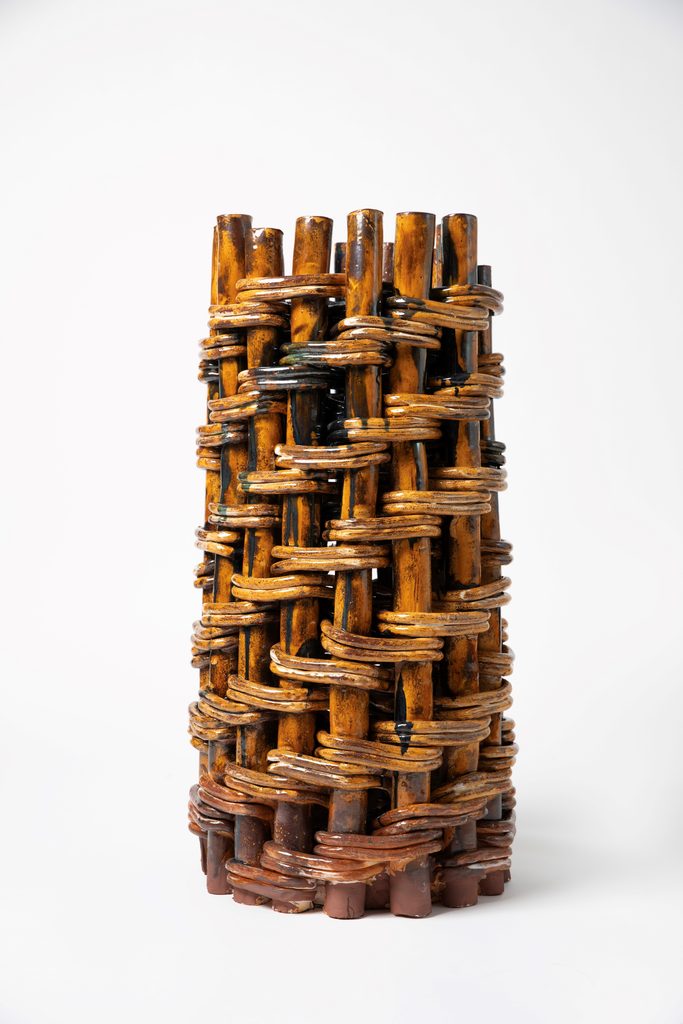
Around Water Tower, a cluster of tall, freestanding woven clay pillars stands throughout the room. Among them are pieces from the series Forgotten Maiden—in the Sacred Mangrove at PAMM, you can find the sculptures II, III, and V. In reference to art history, their column-like appearance resembles Greek caryatids, which were, by definition, standing female figures that took the place of columns—vertical, freestanding, human-scaled, and meant to be read as both body and architecture or landscape.
Grouped together, these towers can be seen as symbols for women whose work—both in domestic spaces and the broader economy—is foundational yet often goes unrecognized. Notably, one sculpture features a photograph of Major’s grandmother, Saphora Newbold, fired directly onto the ceramic surface, paying tribute to her matrilineal heritage.
Visual description of Forgotten Maiden III
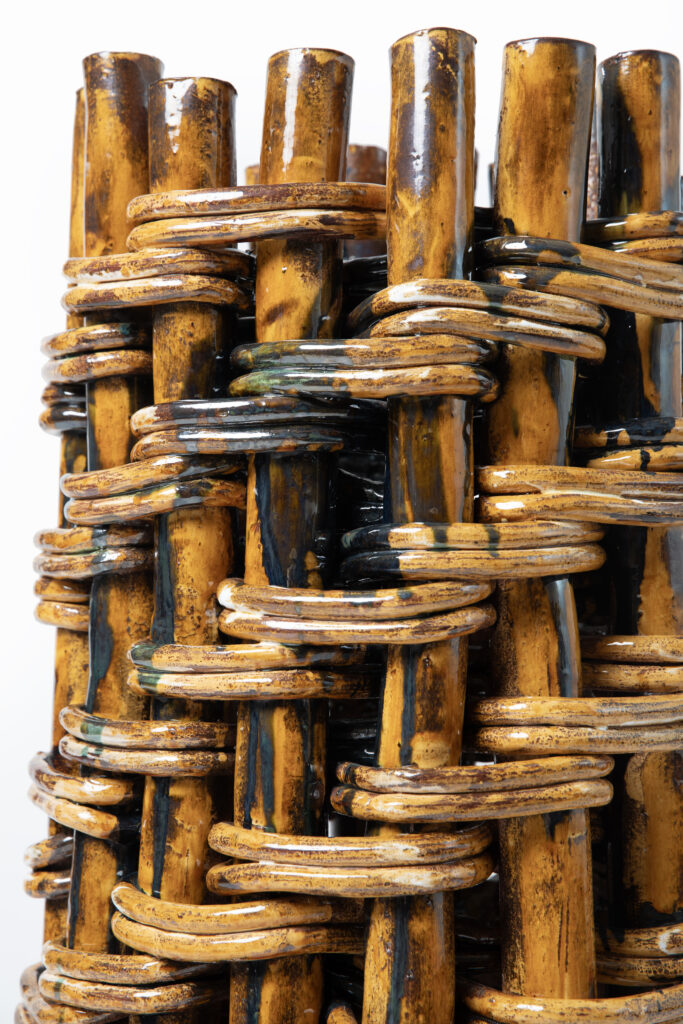
Forgotten Maiden III by Anina Major is a glazed stoneware and sea glass sculpture from 2025. The sculpture stands thirty-four inches tall by thirteen inches wide by fourteen inches deep, or about three feet tall by one foot wide. It is a freestanding, vertical column that rises from the floor.
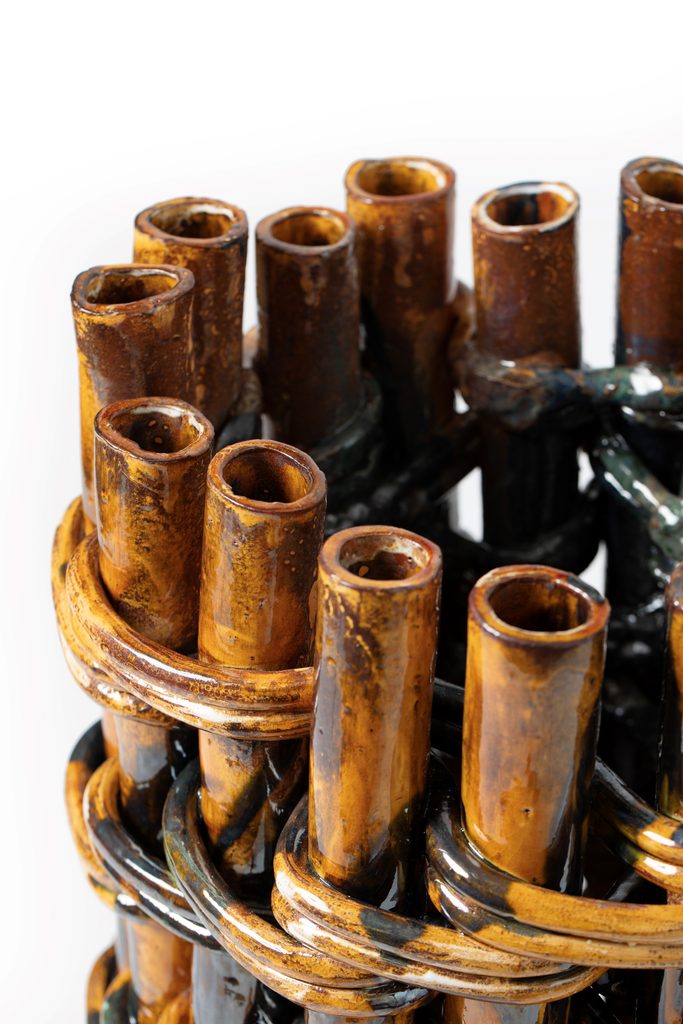
The sculpture is built from many narrow, hollow clay tubes, bundled together upright like a cluster of reeds or bamboo stalks. The tubes vary slightly in height, so their open, rounded tops form an uneven, staggered edge across the top of the piece, with some tubes rising higher than their neighbors. Looking down into the openings, the hollow centers of the tubes are visible, each one a small dark circle ringed by the thickness of the clay wall.
Wrapped horizontally around the bundled tubes are thick coiled ropes of clay, encircling the cluster in several bands. These wrapped bindings cinch the vertical tubes together at various points along the sculpture’s height, much like rope or wire binding together a bundle of sticks or reeds.
The glaze across the surface is rich and varied, ranging from deep amber and honey-gold tones to darker patches of black and brown. In some areas the glaze pools and drips, creating streaks and variations in tone, while in other places it thins out to reveal more matte, earthy brown clay beneath. The coiled bands that wrap around the tubes are rendered in the same warm amber-to-black palette, with a glossy sheen that catches light differently than the slightly more muted vertical tubes they bind. Toward the base, the tubes darken into richer black and brown tones, with the glaze pooling more heavily in this lower section.
Feedback
We hope you enjoyed this Digital Exhibition Guide!
We appreciate you taking the time to submit feedback to us as we strive to make PAMM as engaging as possible. You may submit your feedback anonymously through this form.